
Prosecutors under fire, literally
The Kwaggafontein fallout is exposing contradictions, underfunding, and dangerous institutional failures within South Africa’s justice system.

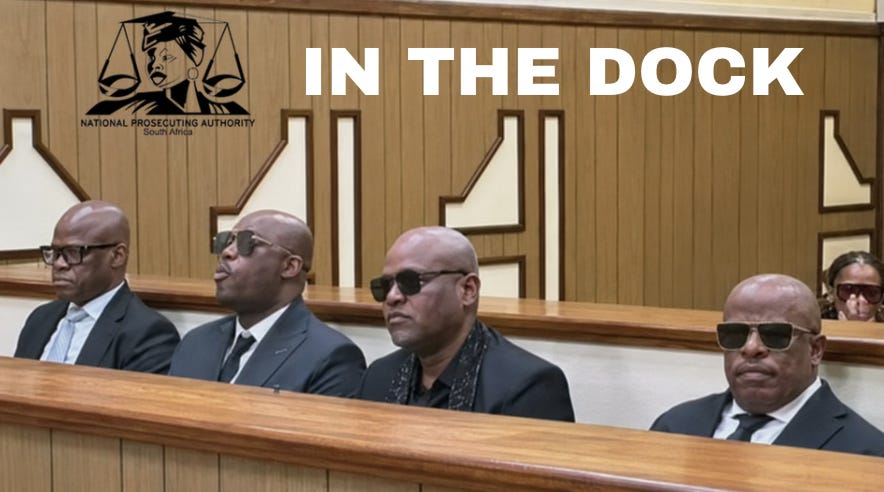
The unfolding controversy surrounding the failed Kwaggafontein bail proceedings is rapidly exposing what appears to be a troubling culture of inconsistency, reactive leadership, and institutional contradiction within the Department of Justice and Constitutional Development and the National Prosecuting Authority.
The statement issued earlier by the Department and the Portfolio Committee Chairperson is politically forceful and rhetorically compelling, but in light of what is unfolding, it also raises a number of troubling questions and possible contradictions.
At the centre of the matter is an uncomfortable question: does the Department and its political leadership genuinely prioritise the safety and operational support of prosecutors, or does concern for prosecutors emerge only after public embarrassment and media outrage?
Last year, Justice Minister Mmamoloko Kubayi struck the correct tone when responding to parliamentary questions regarding the killing of prosecutors. Her remarks were unequivocal. She warned that attacks on prosecutors undermine the rule of law, intimidate legal professionals, and erode public confidence in the justice system.
More chillingly, she disclosed that five prosecutors had been killed over the preceding five years.
Those were not abstract observations. They were acknowledgements by the executive itself that prosecutors in South Africa increasingly operate in hostile and dangerous environments — particularly in matters involving organised crime, extortion syndicates, and politically connected criminal networks.
Yet the events unfolding in Mpumalanga suggest that the government’s rhetoric about protecting prosecutors may not be matched by operational seriousness.
The contradictions are glaring.
On one hand, NDPP Adv. Andy Mothibi publicly stated during an NPA TV interview that the institution’s security structures had informed him that the prosecutor in the Kwaggafontein matter was receiving the necessary protection owing to the threat environment surrounding the case.
On the other hand, the public was simultaneously told that the NPA had “lost contact” with the same prosecutor.
How does an institution lose contact with a prosecutor who is supposedly under active security monitoring because of an assessed existential threat?
Either the protection mechanisms were not nearly as robust as later suggested, or public communication surrounding the matter was careless, contradictory, and designed primarily for damage control. Neither possibility inspires confidence.
What makes matters worse is the apparent disproportionality in prosecutorial deployment.
In a recent Schedule 1 matter involving Member of Parliament Fadiel Adams, the NPA deployed three senior prosecutors to handle a bail hearing.
Yet in a Schedule 5 matter involving alleged extortion-linked taxi bosses in Mpumalanga — a matter plainly carrying heightened security and intimidation risks — the institution allegedly deployed a single prosecutor without visible backup or support.
That disparity raises legitimate and uncomfortable questions for both the DOJCD and the NPA leadership:
What objective criteria govern prosecutorial allocation in high-risk matters?
Are prosecutors in dangerous organised crime matters expected to operate alone?
Is there a national deployment policy, or are such decisions left to provincial discretion and improvisation?
Was any meaningful risk assessment integrated into staffing decisions in the Mpumalanga matter?
Most concerning of all is the growing impression that accountability is being selectively and performatively exercised downward.
The public condemnation from Parliament’s Justice Committee was swift and severe, portraying the prosecutor’s conduct as reckless dereliction bordering on institutional sabotage. Yet there appears to be far less appetite for examining the conduct of leadership structures responsible for prosecutorial deployment, security coordination, contingency planning, and operational oversight.
If prosecutors truly face life-threatening risks — as government itself has acknowledged — then institutional accountability cannot begin and end with public outrage directed at an individual official.
It is common cause that the NPA remains chronically underfunded and deprived of critical operational resources. The Executive and Legislature cannot escape responsibility for any fatal consequences arising from this state of affairs — particularly when vast public resources continue to be expended on the protection and maintenance of an excessively bloated Cabinet and other politically connected office-bearers.
Leadership must also answer for whether prosecutors are being adequately protected, adequately supported, adequately staffed, and adequately backed when confronting organised criminal networks.
Anything less risks creating a dangerous institutional culture in which frontline prosecutors are expected to confront highly volatile criminal enterprises with insufficient support, only to be publicly sacrificed when operational failures occur.
For a justice system already battling declining public confidence, that is not merely unfair. It is unsustainable.
Also read in the Sowetan today: TEBOGO KHAAS | Joe Sibanyoni case exposes deeper governance failures within the NPA

Very sad and embarrassing moments for south Afrika